The prewar closet, what to keep and what to change.
How to renovate a closet in a prewar New York apartment: keeping original doors and trim, rebuilding the interior, lighting, out-of-square walls and lead-safe work.
Published
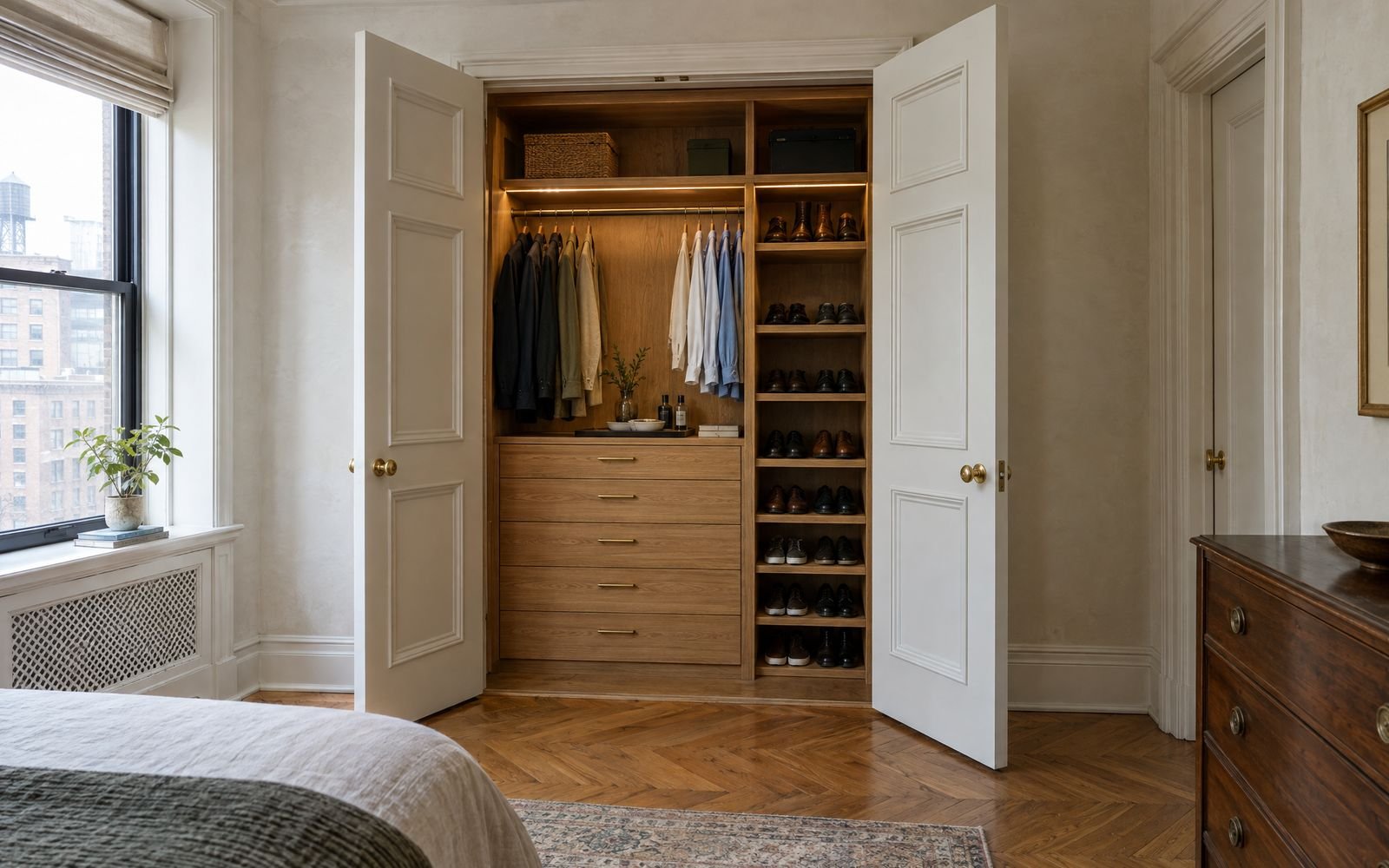
Prewar apartments from the 1900s to the 1940s have closets that look the part: solid panelled doors, deep moldings, brass knobs. Inside, they're often dark, deep and wasteful. The best renovations keep the outside and rebuild the inside.
Keep: doors, trim and hardware
Original solid doors and casings are hard to replace and add value. Strip and repaint, rehang them true, and restore or replace the hardware in the same style.
Change: the interior
A single rod and shelf wastes most of a deep closet. Rebuild with:
- Double hanging on one side, long hanging on the other.
- A drawer bank for folded clothes.
- Shoe shelves or pull-outs.
- Full-height shelves for linens or luggage at the top.
Light it
Prewar closets rarely have light. A door-activated LED strip on a battery or a new circuit makes the whole closet usable.
Walls are never square
Plaster walls lean and bow. Custom interiors are built to the actual measurements and scribed on site, so there are no gaps.
Lead paint
Most prewar buildings have lead paint in older layers. Sanding or cutting should follow lead-safe practices. Kloset Worx is EPA lead-safe certified.
Co-op approvals
Interior closet work is usually simple to approve, but your building may still ask for insurance and set work hours. See co-op and condo installs.
Start with a free 3D design, see reach-in closets, or read about walk-in closets.
Your room, your closet.
A free design visit at your home or our studio, and a 3D design of your closet that's yours to keep. Bring the floor plan if you have one.