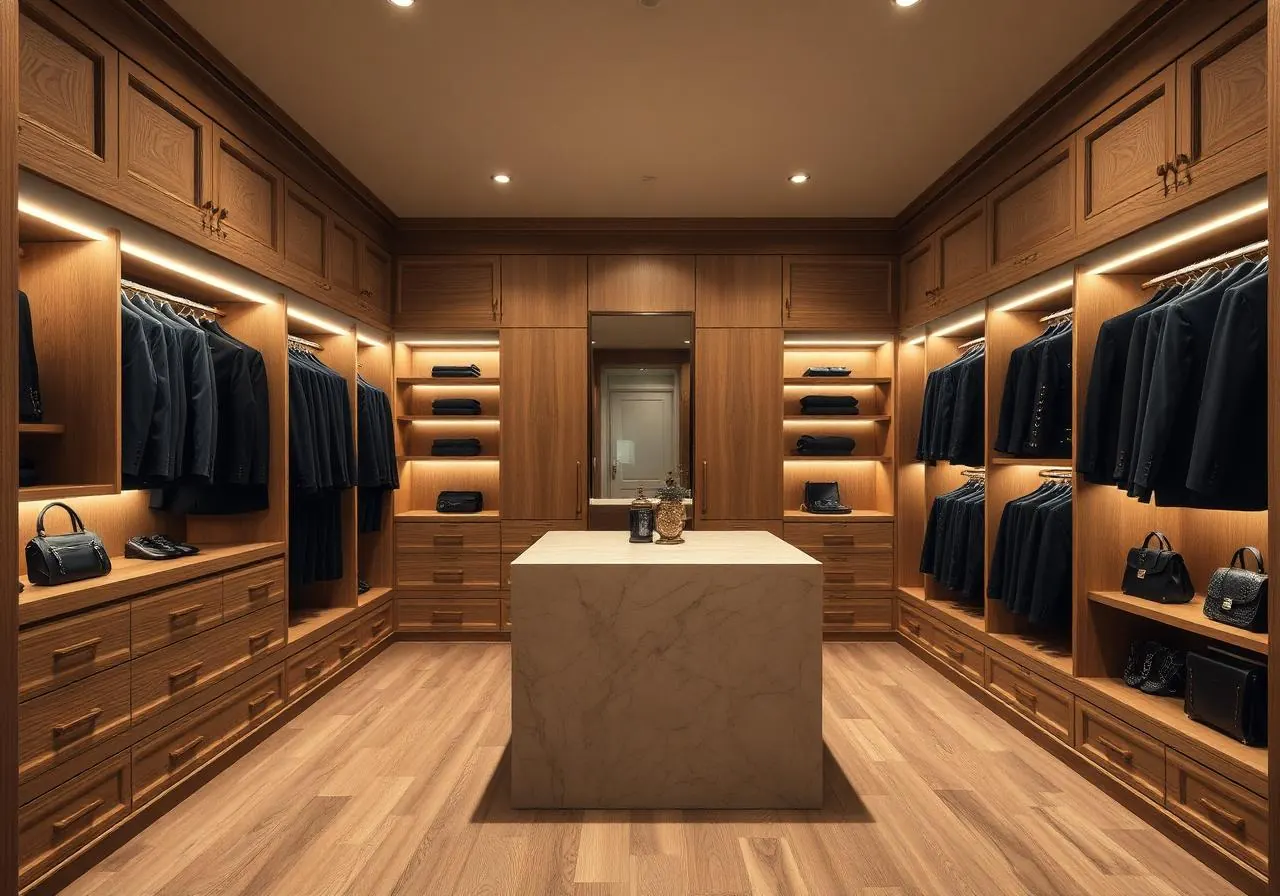
Every closet is a translation from a wardrobe into inches. Count what will hang, fold and be put away, apply a few standard measurements, and the layout almost designs itself.
Key numbers
Start with an inventory.
Before choosing bays, count. A garment on a hanger takes roughly 1 inch of rod (shirts, blouses), 1½ to 2 inches (jackets, suits, dresses) or 2 to 3 inches (coats, knitwear on hangers). Multiply and add a fifth for growth and breathing room.
| Category | Count | × inches | Rod needed |
|---|---|---|---|
| Shirts & blouses | 40 | 1" | 40" |
| Jackets & suits | 12 | 2" | 24" |
| Dresses (long) | 10 | 1.5" | 15" |
| Coats | 6 | 3" | 18" |
| Total + 20% | ≈ 116" |
Do the same for folded items (a stack of 8–10 sweaters fills about 12 inches of shelf width) and for shoes (module 04). The closet space calculator runs this for you.
Rod heights.
Heights are measured from the finished floor to the top of the rod. Clothes hang about 2 inches below the rod on the hanger hook.
| Bay | Rod height | Clear drop needed | For |
|---|---|---|---|
| Long hang | 66–72" | 60–68" | Dresses, coats, full-length trousers |
| Medium hang | 54–60" | 48–52" | Coats, folded-over trousers, a drawer bank below |
| Double hang — top | 80–84" | 38–40" | Shirts, jackets |
| Double hang — bottom | 40–42" | 38–40" | Shirts, skirts, folded trousers |
| Children | 30–45" | — | Raise as they grow; adjustable rods |
An upper rod above about 84 inches is out of comfortable reach for most people; above that, use a pull-down wardrobe lift. Rods longer than about 36 inches need a centre support. See the double-hang math for the long version.
Shelves.
- Depth: 12–14 inches for folded clothes, 14–16 for sweaters and bags, up to 22–24 for a top shelf over hanging.
- Spacing: 10–12 inches between shelves for folded knitwear and denim; 12–14 for handbags; 6–8 for T-shirts and folded tops kept in short stacks.
- Height: keep daily items between about 30 and 72 inches. Above that is off-season storage.
- Span: a ¾-inch shelf carrying folded clothes stays flat at up to about 30–32 inches; past that, support it, thicken it or add a stiffening edge.
- Adjustable vs fixed: most shelves sit on pins and move; at least one fixed shelf per tall bay keeps the panels square.
Drawers.
Drawers cost more than shelves and earn it: nothing gathers dust, everything is visible from above, and small items stay organised.
| Drawer | Inside height | Use |
|---|---|---|
| Shallow | 3–4" | Jewellery, watches, ties, belts — usually with lined inserts |
| Standard | 6–8" | Underwear, socks, T-shirts, workout clothes |
| Deep | 10–12" | Sweaters, denim, pyjamas |
| File-deep | 12–14"+ | Bags, hats, bulky knits |
Drawer banks are usually 18–36 inches wide and topped at 36–42 inches so the top doubles as a surface. Keep the top drawer below about 50 inches so you can see into it. Full-extension, soft-close slides are standard in fitted work (module 06).
Common mistakes.
- A double hang whose bottom rod is too low for long shirts
- A top rod over 84 inches with no lift
- Deep shelves spaced too far apart — stacks topple
- All shelves, no drawers — or all drawers, no flexibility
Check yourself.
What height should a closet rod be?
About 66–72 inches for long hanging. For double hanging, place the upper rod at 80–84 inches and the lower at 40–42 inches.
How much rod space do I need?
Allow about 1 inch per shirt, 1½–2 inches per jacket or dress, and 2–3 inches per coat, then add 20% for growth.
How far apart should closet shelves be?
10–12 inches for folded sweaters and denim; 12–14 inches for handbags.
Finished the module? Mark it complete — your progress is saved on this device.