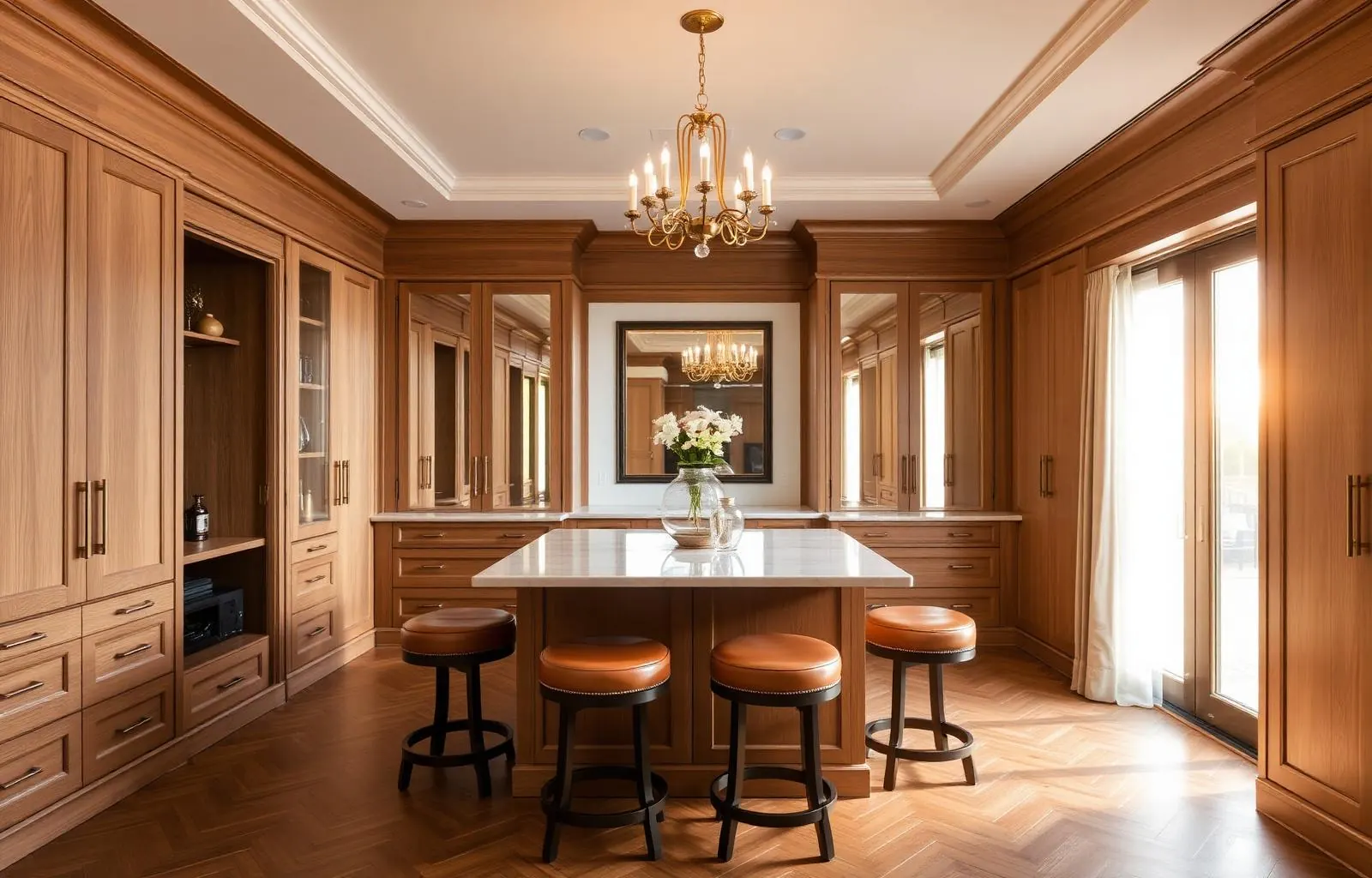
A custom closet is a small construction project. Knowing the stages — and what is decided at each — is the surest way to get the closet you pictured, on the date you were promised.
Key numbers
The stages of a project.
- The brief. What you store, how you dress, what you love and hate about the closet you have. Photos, rough measurements and inspiration help. Our design brief questionnaire lists the questions.
- Concept and 3D design. A layout and photoreal 3D design from your photos and numbers, with a written estimate. At Kloset Worx the first design is part of the free consultation.
- Site survey. The room is measured precisely with LiDAR and a steel tape. At Kloset Worx this visit carries a $200 measurement fee, credited to the final bill.
- Shop drawings. Plans, elevations and sections of every panel, with revision numbers. You approve them — the sign-off is the contract for what gets built.
- Samples. Wood, finish and hardware approved on physical samples.
- Fabrication. Cutting, edging, finishing and assembly in the shop — about 25 days from drawing sign-off at Kloset Worx.
- Installation. Delivery, fitting, scribing, levelling, lighting and adjustment — about 5 days on site for a typical project.
- Walk-through and sign-off. Every door, drawer and light checked together; any punch-list item fixed.
Working in New York buildings.
Co-ops and condos usually require an alteration agreement before work starts: drawings, a scope of work, and a certificate of insurance (COI) naming the building and its managing agent. Approval typically takes about two weeks; fabrication can start in parallel if you choose, so installation is not delayed. Buildings also set working hours, freight-elevator bookings and protection rules for hallways. Pieces must be sized to fit the elevator and turn the hallway corners — part of why the survey matters. Read co-op and condo installations and closet permits in NYC. Pre-1978 buildings may require lead-safe work practices; Kloset Worx is EPA lead-safe certified.
Comparing quotes.
Two quotes are only comparable if they describe the same closet. Check: the material of the boxes as well as the fronts; drawer box construction; slide and hinge brands; lighting (CRI, profiles, sensors); whether installation, delivery, removal of the old closet, patching and painting are included; and the warranty. See how to compare closet quotes and the cost estimator.
Living with it: care.
- Dust with a soft, dry or barely damp cloth; avoid silicone polishes and ammonia cleaners.
- Keep indoor humidity between about 35 and 55% — wood is happiest where people are.
- Expect natural wood to change colour in its first year, cherry most of all; rotate objects that sit in sunlight.
- Hinges and drawer fronts adjust with a screwdriver as a house settles — a two-minute job.
- Don't overload shelves past their span; add a pin or a support rather than letting a shelf bow.
Full guidance is on the care & guarantee page.
Common mistakes.
- Skipping the shop drawings and approving from a rendering
- Not asking the building for its alteration requirements early
- Comparing quotes that describe different closets
- Ordering before samples are approved in the room's light
Check yourself.
How long does a custom closet take?
At Kloset Worx, fabrication takes about 25 days from drawing sign-off and installation about 5 days on site. Building approval, where required, typically takes about two weeks and can run in parallel.
What are shop drawings?
Detailed plans, elevations and sections of every panel of the closet, issued with revision numbers for the client to approve before fabrication.
Do I need building approval for a custom closet in NYC?
Most co-ops and condos require an alteration agreement with drawings and a certificate of insurance before installation. Ask your managing agent early.
Finished the module? Mark it complete — your progress is saved on this device.